Cacao Tree Care
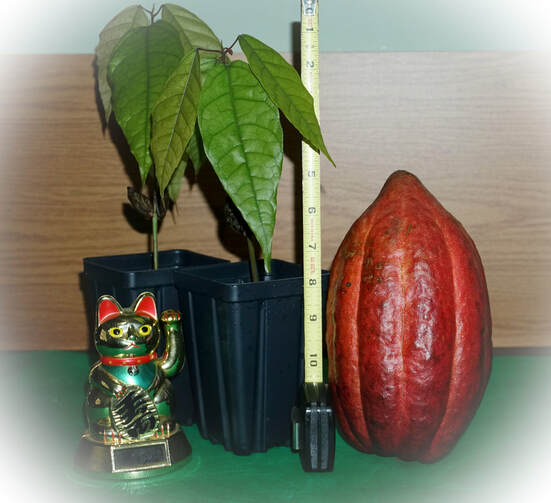
As your seedling grows, transplant it into larger containers, as the root system may require. Focus on keeping the plant damp (not water logged) and at temps between 65-90 degrees F.
When container growing use a top quality potting soil. Do not use garden soil or top soil!
NOTE: For those that are growing Cacao in climates that drop into temperatures below 50 degrees
You will need a greenhouse or bring your tree indoors until the weather warms back up consistently. You will also need to keep the tree near a window or a skylight. The light should be bright but filtered not intense light! It is important to maintain a high level of humidity around your trees leaves. Get a humidifier and at the very least use a tray under the pot with pebbles and mist your tree with water a few times a day. Use a spray bottle.
Fertilize every two weeks from spring through fall with an organic liquid fertilizer for acid loving plants. 1 teaspoon per gallon of water is typical. Read the label. You can also use organic acid fertilizer granules. Happy frog is a good brand. Have a look for other good products here:
If you live in a tropical or subtropical area, transplant your tree when it is two feet tall to the landscape.Select an area that is bright but not in direct sun.
Choose a well-draining site with a pH near 5.5 - 6.5. Cacao trees do better when protected from winds. Dig a hole three times the depth and width of the tree’s root ball. Return two thirds of the loose soil back into the hole and set the tree atop the mound at the same level it grew in its pot. Check your soil pH and add peat moss and mix well with the native soil. Fill in the planting hole as you water it well to eliminate air pockets. Cover the surrounding ground with a 3 to 6-inch layer of pine bark, leaf liter or other organic mulch. Always keep the mulch at least six - eight inches away from the trunk.
Depending upon rainfall, the cacao will need between 1-2 inches of water per week. Don’t let the soil get soggy.
Provide your tree with 1/4 pound of 15-15-15 or similar organic fertilizer every two weeks and then increase to 1/2 pound of fertilizer every month during spring and summer only. Also provide foliage sprays containing minerals. The tree should flower when it is about three years old and about four to five feet tall. Hand pollinate the flower in the early morning. Don’t panic if some of the resulting pods drop. It is natural for the some pods to shrivel, leaving no more than two on each cushion.
Here is a great resource for you to learn more about growing cacao and also meet others who share your passion. You can learn a lot in this group. Check us out here:
As your seedling grows, transplant it into larger containers, as the root system may require. Focus on keeping the plant damp (not water logged) and at temps between 65-90 degrees F.
When container growing use a top quality potting soil. Do not use garden soil or top soil!
NOTE: For those that are growing Cacao in climates that drop into temperatures below 50 degrees
You will need a greenhouse or bring your tree indoors until the weather warms back up consistently. You will also need to keep the tree near a window or a skylight. The light should be bright but filtered not intense light! It is important to maintain a high level of humidity around your trees leaves. Get a humidifier and at the very least use a tray under the pot with pebbles and mist your tree with water a few times a day. Use a spray bottle.
Fertilize every two weeks from spring through fall with an organic liquid fertilizer for acid loving plants. 1 teaspoon per gallon of water is typical. Read the label. You can also use organic acid fertilizer granules. Happy frog is a good brand. Have a look for other good products here:
If you live in a tropical or subtropical area, transplant your tree when it is two feet tall to the landscape.Select an area that is bright but not in direct sun.
Choose a well-draining site with a pH near 5.5 - 6.5. Cacao trees do better when protected from winds. Dig a hole three times the depth and width of the tree’s root ball. Return two thirds of the loose soil back into the hole and set the tree atop the mound at the same level it grew in its pot. Check your soil pH and add peat moss and mix well with the native soil. Fill in the planting hole as you water it well to eliminate air pockets. Cover the surrounding ground with a 3 to 6-inch layer of pine bark, leaf liter or other organic mulch. Always keep the mulch at least six - eight inches away from the trunk.
Depending upon rainfall, the cacao will need between 1-2 inches of water per week. Don’t let the soil get soggy.
Provide your tree with 1/4 pound of 15-15-15 or similar organic fertilizer every two weeks and then increase to 1/2 pound of fertilizer every month during spring and summer only. Also provide foliage sprays containing minerals. The tree should flower when it is about three years old and about four to five feet tall. Hand pollinate the flower in the early morning. Don’t panic if some of the resulting pods drop. It is natural for the some pods to shrivel, leaving no more than two on each cushion.
Here is a great resource for you to learn more about growing cacao and also meet others who share your passion. You can learn a lot in this group. Check us out here:
|
|



Your one stop site for all of your mango research and social resources.
|


* FDA Disclaimer
The products and statements made about specific plants or products on this web site have not been evaluated by the United States Food and Drug Administration (FDA) and are not intended to diagnose, treat, cure or prevent disease. All information provided on this web site or any information contained on or in any product label or packaging is for informational purposes only and is not intended as a substitute for advice from your physician or other health care professional. You should not use the information on this web site for diagnosis or treatment of any health problem. Always consult with a healthcare professional before starting any new vitamins, supplements, diet, or exercise program, before taking any medication, or if you have or suspect you might have a health problem.
Advertising Disclosure:
Pepesplants.com is a participant in the Amazon Services LLC Associates Program and also Googles affiliate advertising program. The programs provide a means for web sites to earn revenues from advertising and or sales.
Content Disclosure
Use all information on this site at your own risk.
The content here is based on the publishers personal experience in the green industries.
Although every reasonable effort has been made to ensure the accuracy of the information contained on this site, absolute accuracy cannot be guaranteed. This site, and all information and materials appearing on it, are presented to the user "as is" without warranty of any kind, either express or implied
The products and statements made about specific plants or products on this web site have not been evaluated by the United States Food and Drug Administration (FDA) and are not intended to diagnose, treat, cure or prevent disease. All information provided on this web site or any information contained on or in any product label or packaging is for informational purposes only and is not intended as a substitute for advice from your physician or other health care professional. You should not use the information on this web site for diagnosis or treatment of any health problem. Always consult with a healthcare professional before starting any new vitamins, supplements, diet, or exercise program, before taking any medication, or if you have or suspect you might have a health problem.
Advertising Disclosure:
Pepesplants.com is a participant in the Amazon Services LLC Associates Program and also Googles affiliate advertising program. The programs provide a means for web sites to earn revenues from advertising and or sales.
Content Disclosure
Use all information on this site at your own risk.
The content here is based on the publishers personal experience in the green industries.
Although every reasonable effort has been made to ensure the accuracy of the information contained on this site, absolute accuracy cannot be guaranteed. This site, and all information and materials appearing on it, are presented to the user "as is" without warranty of any kind, either express or implied
Site created and managed by Pepe's Fruit Trees. Copyright 2024 - All Right Reserved
Site created and managed by Pepe's Fruit Trees. Copyright 2024 - All Right Reserved