Pruning fruit trees properly, is a skill that is easy to learn and needs to be performed from time to time. Below is a simple illustration and one of the basic methods you should practice.
Dead wood in a tree is cellulose - a compound sugar. This decayed wood is food for wood boring insects. The dead tissue easily becomes infected and hosts fungal organisms.
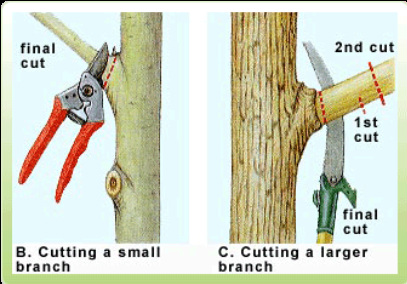
Correct pruning method diagram.
The removal of dead, dying, and broken limbs in a timely fashion eliminates many of the problems caused by these organisms. Pruning is important for fruit production and for training fruit trees.
You can become a real pro with this great book How To Prune Fruit Trees. Very well worth picking it up today.
The book covers Subtropical trees like Avocado, Loquat and many others. You can also take a sneak peek inside. Have a look at these great pruning tools from Corona. Real professional tools and top quality.
You can become a real pro with this great book How To Prune Fruit Trees. Very well worth picking it up today.
The book covers Subtropical trees like Avocado, Loquat and many others. You can also take a sneak peek inside. Have a look at these great pruning tools from Corona. Real professional tools and top quality.
|
|



Your one stop site for all of your mango research and social resources.
|


* FDA Disclaimer
The products and statements made about specific plants or products on this web site have not been evaluated by the United States Food and Drug Administration (FDA) and are not intended to diagnose, treat, cure or prevent disease. All information provided on this web site or any information contained on or in any product label or packaging is for informational purposes only and is not intended as a substitute for advice from your physician or other health care professional. You should not use the information on this web site for diagnosis or treatment of any health problem. Always consult with a healthcare professional before starting any new vitamins, supplements, diet, or exercise program, before taking any medication, or if you have or suspect you might have a health problem.
Advertising Disclosure:
Pepesplants.com is a participant in the Amazon Services LLC Associates Program and also Googles affiliate advertising program. The programs provide a means for web sites to earn revenues from advertising and or sales.
Content Disclosure
Use all information on this site at your own risk.
The content here is based on the publishers personal experience in the green industries.
Although every reasonable effort has been made to ensure the accuracy of the information contained on this site, absolute accuracy cannot be guaranteed. This site, and all information and materials appearing on it, are presented to the user "as is" without warranty of any kind, either express or implied
The products and statements made about specific plants or products on this web site have not been evaluated by the United States Food and Drug Administration (FDA) and are not intended to diagnose, treat, cure or prevent disease. All information provided on this web site or any information contained on or in any product label or packaging is for informational purposes only and is not intended as a substitute for advice from your physician or other health care professional. You should not use the information on this web site for diagnosis or treatment of any health problem. Always consult with a healthcare professional before starting any new vitamins, supplements, diet, or exercise program, before taking any medication, or if you have or suspect you might have a health problem.
Advertising Disclosure:
Pepesplants.com is a participant in the Amazon Services LLC Associates Program and also Googles affiliate advertising program. The programs provide a means for web sites to earn revenues from advertising and or sales.
Content Disclosure
Use all information on this site at your own risk.
The content here is based on the publishers personal experience in the green industries.
Although every reasonable effort has been made to ensure the accuracy of the information contained on this site, absolute accuracy cannot be guaranteed. This site, and all information and materials appearing on it, are presented to the user "as is" without warranty of any kind, either express or implied
Site created and managed by Pepe's Fruit Trees. Copyright 2024 - All Right Reserved
Site created and managed by Pepe's Fruit Trees. Copyright 2024 - All Right Reserved