
Planting a Fruit Tree
Click image to enlarge
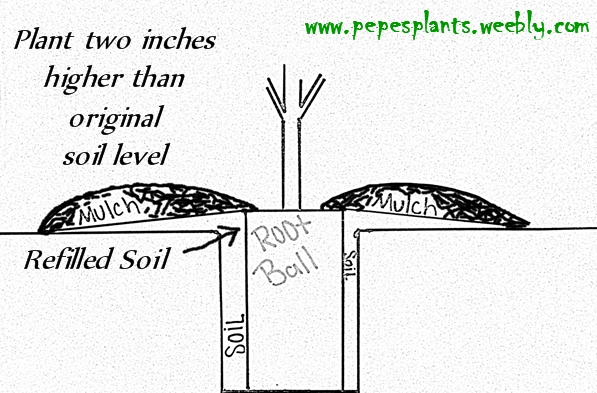
Planting your tree is easy.
When placing the tree in the ground spread the roots out. Roots that are circling will continue to grow and circle.
Container grown trees are often times re bound. The root growth pattern will grow to the shape of the pot. A s
Break that habit, that root growing memory by spreading the roots out!
Be sure to plant and backfill with the existing soil from the planting hole. You should slowly water with a hose as you backfill to avoid any air pockets. We recommend you use Mycorrhizal fungi at time of planting. Do not add any fertilizer for at least a month after planting.
Do not fertilize in winter months! Water your new tree two or three times a week deeply depending on the weather and amount of natural rainfall. Be sure to spread mulch to help conserve the moisture and do not allow the mulch to pile up around the trunk. Do not use mulch on citrus trees.
Plant the tree one inch higher than the actual soil level. Planting this way will keep the root system healthier, provide good drainage and stimulate root growth and disease resistance.
Mango trees benefit from having the roots trimmed lightly at time of planting.
Planting your tree is easy.
When placing the tree in the ground spread the roots out. Roots that are circling will continue to grow and circle.
Container grown trees are often times re bound. The root growth pattern will grow to the shape of the pot. A s
Break that habit, that root growing memory by spreading the roots out!
Be sure to plant and backfill with the existing soil from the planting hole. You should slowly water with a hose as you backfill to avoid any air pockets. We recommend you use Mycorrhizal fungi at time of planting. Do not add any fertilizer for at least a month after planting.
Do not fertilize in winter months! Water your new tree two or three times a week deeply depending on the weather and amount of natural rainfall. Be sure to spread mulch to help conserve the moisture and do not allow the mulch to pile up around the trunk. Do not use mulch on citrus trees.
Plant the tree one inch higher than the actual soil level. Planting this way will keep the root system healthier, provide good drainage and stimulate root growth and disease resistance.
Mango trees benefit from having the roots trimmed lightly at time of planting.
Planting a Citrus Tree
|
|



Your one stop site for all of your mango research and social resources.
|


* FDA Disclaimer
The products and statements made about specific plants or products on this web site have not been evaluated by the United States Food and Drug Administration (FDA) and are not intended to diagnose, treat, cure or prevent disease. All information provided on this web site or any information contained on or in any product label or packaging is for informational purposes only and is not intended as a substitute for advice from your physician or other health care professional. You should not use the information on this web site for diagnosis or treatment of any health problem. Always consult with a healthcare professional before starting any new vitamins, supplements, diet, or exercise program, before taking any medication, or if you have or suspect you might have a health problem.
Advertising Disclosure:
Pepesplants.com is a participant in the Amazon Services LLC Associates Program and also Googles affiliate advertising program. The programs provide a means for web sites to earn revenues from advertising and or sales.
Content Disclosure
Use all information on this site at your own risk.
The content here is based on the publishers personal experience in the green industries.
Although every reasonable effort has been made to ensure the accuracy of the information contained on this site, absolute accuracy cannot be guaranteed. This site, and all information and materials appearing on it, are presented to the user "as is" without warranty of any kind, either express or implied
The products and statements made about specific plants or products on this web site have not been evaluated by the United States Food and Drug Administration (FDA) and are not intended to diagnose, treat, cure or prevent disease. All information provided on this web site or any information contained on or in any product label or packaging is for informational purposes only and is not intended as a substitute for advice from your physician or other health care professional. You should not use the information on this web site for diagnosis or treatment of any health problem. Always consult with a healthcare professional before starting any new vitamins, supplements, diet, or exercise program, before taking any medication, or if you have or suspect you might have a health problem.
Advertising Disclosure:
Pepesplants.com is a participant in the Amazon Services LLC Associates Program and also Googles affiliate advertising program. The programs provide a means for web sites to earn revenues from advertising and or sales.
Content Disclosure
Use all information on this site at your own risk.
The content here is based on the publishers personal experience in the green industries.
Although every reasonable effort has been made to ensure the accuracy of the information contained on this site, absolute accuracy cannot be guaranteed. This site, and all information and materials appearing on it, are presented to the user "as is" without warranty of any kind, either express or implied
Site created and managed by Pepe's Fruit Trees. Copyright 2024 - All Right Reserved
Site created and managed by Pepe's Fruit Trees. Copyright 2024 - All Right Reserved