Pepe's Fruit Trees • Davie, Florida
Persimmon Trees for South Florida
Learn about grafted Triumph and South Florida or Tropical Persimmon trees selected for warm South Florida conditions.
I have more than 30 years of experience growing tropical and subtropical fruit trees in South Florida. The persimmons discussed here are low-chill, astringent cultivars chosen because they are reliable backyard producers in our climate.
Persimmon trees are currently sold out.
Additional grafted persimmon trees may become available seasonally for local pickup in Davie, Florida. We do not ship persimmon trees.
Best Persimmon Trees for South Florida
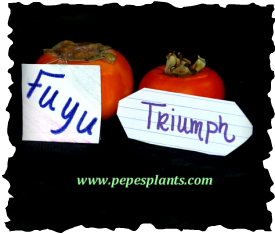
Triumph and South Florida or Tropical Persimmon are proven low-chill, astringent cultivars for South Florida. They grow, flower and produce dependable crops in warm conditions when planted in full sun, well-drained soil and cared for properly.
Why These Persimmon Cultivars Are Recommended
- Selected specifically for proven South Florida performance.
- Grafted onto native American persimmon rootstock.
- Low-chill cultivars suitable for warm winters.
- Self-fruitful trees that do not require a second persimmon for fruit.
- Astringent fruit with excellent flavor when fully ripe and soft.
- Backed by more than 30 years of South Florida fruit-tree experience.
Firsthand South Florida Growing Experience
My recommendations are based on years of observing how fruit trees respond to South Florida heat, humidity, rainfall, dry periods, soil conditions and warm winters.
The cultivars on this page are not generic persimmons chosen from a catalog. They are selected because they have demonstrated dependable production for experienced South Florida growers and backyard homeowners.
Persimmon Cultivars Recommended for South Florida
| Cultivar | Type | South Florida performance | Fruit notes |
|---|---|---|---|
| Triumph | Low-chill, astringent, self-fruitful | One of the most dependable persimmons for South Florida | Small to medium sweet fruit; allow untreated fruit to become fully soft |
| South Florida Persimmon / Tropical Persimmon | Low-chill, astringent, self-fruitful | A productive South Florida cultivar selected for very warm winters | Similar to Triumph; fruit should become fully colored and soft before eating |
For a deeper cultivar comparison, read More on South Florida Persimmons.
Grafted onto Native American Persimmon Rootstock
When available, Pepe's Triumph and South Florida or Tropical Persimmon trees are propagated onto native American persimmon rootstock, Diospyros virginiana.
This rootstock is widely used in Florida because it adapts to many Florida soil conditions and is compatible with many Japanese persimmon cultivars.
Important: Remove all shoots that grow below the graft union. Those shoots come from the rootstock and can compete with the named fruiting cultivar.
How to Plant a Grafted Persimmon Tree
- Choose a full-sun location with well-drained soil.
- Water the container before planting so the root ball is moist.
- Handle the root ball carefully because persimmon roots can be sensitive to damage.
- Dig the hole wider than the root ball but no deeper than the root system.
- Plant at the same depth the tree grew in the nursery container.
- Keep the graft union above the final soil level.
- Backfill mainly with native soil and water thoroughly.
- Apply mulch over the root area without piling mulch against the trunk.
Do not place fertilizer in the planting hole. Wait until the tree begins establishing before starting a conservative feeding program.
South Florida Persimmon Tree Care
Sunlight
Plant persimmons in full sun. Strong light supports healthy growth, flower-bud development, fruit color and sweetness.
Watering
Water immediately after planting. Keep the root zone evenly moist during establishment, but never leave it waterlogged. During dry weather, a newly planted tree may need water two or three times per week, adjusted for soil and rainfall.
Soil and drainage
Persimmons need good drainage and should not be planted where water remains after rain. Slightly acidic soil is suitable. Avoid repeated salt exposure and highly saline irrigation water.
Fertilizer
Use fertilizer conservatively during active growth. A practical South Florida schedule is late winter, late spring and midsummer. Use a complete fruit-tree fertilizer or quality organic fertilizer and follow the label. Too much nitrogen can encourage weak growth and fruit drop.
Micronutrients
Trees growing in alkaline South Florida soils may benefit from properly labeled micronutrient drenches or foliar products. Apply only as directed and diagnose deficiencies before repeated treatment.
Pruning
Prune lightly during dormancy to remove dead, damaged and crossing branches and to maintain a strong framework. Avoid severe pruning that removes excessive fruiting wood.
Fruit thinning and support
Young trees may set more fruit than their branches can support. Thin crowded fruit and support heavily loaded limbs when necessary.
How to Ripen Astringent Persimmons
Triumph and South Florida or Tropical Persimmon are all astringent. Untreated fruit should become fully colored and very soft before eating.
A firm, unripe astringent persimmon can create an intense dry and puckering sensation. Allow the fruit to soften naturally at room temperature unless you are using a proven food-safe deastringency method.
Current Persimmon Tree Availability
Persimmon trees are currently sold out. They are seasonal and may return in limited quantities in the future.
When available, persimmon trees are offered for local pickup in Davie, Florida only. Persimmon trees are not shipped.
Browse Currently Available Tropical Fruit TreesFrequently Asked Questions About Persimmon Trees
What persimmon trees does Pepe's Fruit Trees offer?
Pepe's Fruit Trees periodically offers grafted low-chill persimmon trees selected for South Florida, including Triumph and South Florida or Tropical Persimmon. They are currently sold out and may return seasonally.
Are these persimmon trees suitable for South Florida?
Yes. Triumph and South Florida or Tropical Persimmon are proven low-chill, astringent cultivars that experienced South Florida growers have found to be reliable producers.
Are South Florida Persimmon and Tropical Persimmon the same cultivar?
South Florida Persimmon and Tropical Persimmon are cultivar names used for the same South Florida-adapted astringent type on this page. It is a low-chill selection known for productive growth in warm conditions.
Is Triumph persimmon astringent?
Yes. Triumph is an astringent persimmon. The fruit should be allowed to become fully colored and soft before eating unless a reliable postharvest deastringency treatment is used.
Is South Florida or Tropical Persimmon astringent?
Yes. South Florida Persimmon, also called Tropical Persimmon on this page, is astringent and should be fully ripe and soft before eating unless treated to remove astringency.
Are the persimmon trees grafted?
Yes. Pepe's Fruit Trees propagates Triumph and South Florida or Tropical Persimmon by grafting them onto native American persimmon rootstock.
Why use native American persimmon rootstock?
Native American persimmon rootstock is widely used in Florida because it adapts well to many Florida soils and is compatible with many Japanese persimmon cultivars.
Do I need two persimmon trees to get fruit?
No. The low-chill astringent cultivars discussed on this page are self-fruitful and can produce fruit without a second tree.
How much sun does a persimmon tree need?
Persimmon trees perform best in full sun. At least six hours of direct sunlight supports strong growth, flower-bud development and fruit quality.
What soil is best for persimmon trees?
Persimmons need well-drained soil and should not remain waterlogged. A slightly acidic soil is suitable, and the graft union should remain above the final soil level.
How should I plant a grafted persimmon tree?
Plant the tree at the same depth it grew in the nursery container. Handle the root ball carefully, keep the graft union above soil level, backfill mainly with native soil, water thoroughly and mulch without touching the trunk.
How often should I water a newly planted persimmon tree?
Water immediately after planting and keep the root zone evenly moist during establishment. In dry weather, young trees may need water two or three times per week, adjusted for rainfall, soil and drainage.
What fertilizer should I use for persimmon trees?
Use fertilizer conservatively. A complete fruit-tree fertilizer or quality organic fertilizer can be applied during active growth according to label directions. Avoid putting fertilizer in the planting hole.
When should I fertilize persimmon trees in South Florida?
A practical schedule is late winter, late spring and midsummer during active growth. Adjust the amount for tree size, soil conditions and product directions, and avoid excessive nitrogen.
When do persimmons ripen in South Florida?
Triumph and South Florida or Tropical Persimmon commonly ripen from late summer into fall and early winter. Exact timing varies with weather, tree age and growing conditions.
How do I know when an astringent persimmon is ready to eat?
Allow the fruit to develop full color and become very soft before eating. Firm, untreated astringent persimmons can cause an intense dry and puckering sensation.
Can persimmon trees grow in containers?
Young grafted persimmon trees can grow temporarily in large containers, but long-term production is generally better in the ground because the trees need substantial root space.
Should I remove growth below the graft?
Yes. Remove shoots that arise below the graft union because they come from the rootstock and can compete with the desired cultivar.
Why is my young persimmon dropping fruit?
Young persimmons may drop fruit because of natural thinning, drought, overwatering, root stress, excessive nitrogen, heavy crop load or sudden weather changes.
When are persimmon trees available?
Persimmon trees are currently sold out. Additional grafted trees may become available seasonally in limited quantities for local pickup in Davie, Florida only. We do not ship persimmon trees.