FLORIDA FRUIT TREES FOR FLORIDA CUSTOMERS - FREE STATE WIDE SHIPPING
NOTE:Growing citrus trees can be quite challenging. This page provides you with valuable information, so you will be prepared to tackle growing citrus. Have fun and pay attention to your citrus trees.
Planting Citrus Trees?
We are providing some information here to help you plant and grow healthier citrus trees. This information is from our personal experience.
Basic Soil Requirements:
All citrus trees require deep well drained soil. Select a planting site with good runoff to prevent water standing around the tree. Check the planting site to determine that your soil drainage is suitable, do the following.Using a post hole digger, dig to a depth of 3 to 4 feet and fill the hole with water. All water should drain from the hole within 24 hours.
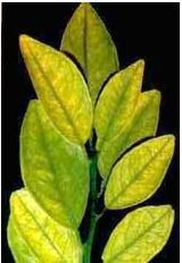
Soils requiring more than 24 hours to drain completely should be avoided unless raised planting beds are used. Most citrus trees grow well in a soil pH range from slightly acidic to a little over neutral (6 to 7.5) pH.Citrus trees are not very happy if grown in alkaline soils (pH above 8.0). Calcareous soils that are high in free lime are also unsuitable, as they cause lime-induced chlorosis, see photo below.
How to plant your Citrus Tree
Clear out weeds and grass approximately 3 feet around the diameter of your planting site. After planting your tree you should always keep the site free of weeds and grass. Mulch is not recommended because it can keep soil to moist! Ideally you want good air circulation at the tree's base to avoid any fungal diseases caused by excess moisture etc.
When planting from containers, dig a planting hole in a well drained area of your property. Choose a sunny spot. Your hole should be 4 - 6 inches wider than the root ball and approximately 4 inches deeper. Fill the hole half full of water. Take your tree and roll the container gently on the ground and squeeze the root ball out of the container. Keep the root ball intact. Don't allow the root ball to fall apart. Position the tree in the center of the planting hole. Gently spread out any circling roots with your hands. Now, add more soil and water the soil and continue backfilling soil to remove any air pockets. The base of your tree should be about 1 inch above the ground. With your hands pack down the soil slightly. Now make a circular basin around the tree trunk to keep the water from running away as you water. This basin can be about 8 - 10 inches away from the trunk.
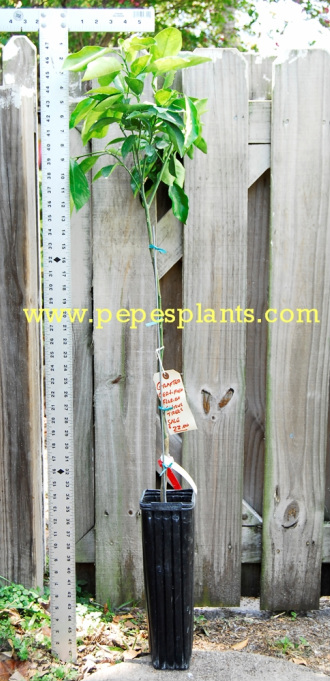
Planting your tree from a Citrus Pot: (see photo on right)
Here you will follow all the above instructions with only a few exceptions as described here. In this situation you cut away the container with a razor or sharp knife. Do not roll the long citrus pot on the ground as doing so will most likely damage the roots. Place the tree in the hole while gently shaking loose soil into the hole as you move the tree up and down and gently spread out the roots by pulling them loose with your hand. You should have some loose roots and the tap root. The long tap root should go straight to the bottom of the hole. Help the roots stay strong and healthy with beneficial fungi.
Watering: Young trees need water at least three times per week for the first two weeks. Water twice a week after the third week and keep in mind that during our rainy season you may not need to water at all.
Good Nutrition Keeps Your Tree Healthy!
This is the one thing you don't want to ignore. We recommend you fertilize your tree about one month after it has been planted. Be sure to use a citrus fertilizer with minor elements. Spread a small handful around the drip line of the tree at least once a month in spring and summer. Fertilizing around the drip line will encourage the roots to grow out to seek the nutrients. Over feeding is worse than under feeding. Never, ever, ever, ever, use fertilizer spikes!
Vigoro 6-4-6 is a good all purpose granular fertilizer (not organic) for container and landscape grown fruit trees. Read the label prior to application! Espoma also has organic fertilizer see the link below.
Here are some organic fertilizers. A. Espoma Citrus Tone B. Cottonseed Meal (For acid loving plants) C. Jobes Fruit and Citrus
A good compost tea can often be the only fertilizer you need. The tea is only as good as the organic material used and the biology in the tea. Compost teas are truly amazing and I recommend you use them on a regular basis.
Growing citrus is challenging and not for people that are too busy to care for the tree.
When to fertilize:
Fertilizer should be applied beginning in late February-early March and ends in late September
All your trees need as a minimum items 1, 2 & 3 below.
1. Citrus fertilizer monthly during spring and summer.
2. Citrus nutritional sprays once per month during fall and winter.
3. For young trees less than three years of age use a foliar spray applications of 20-20-20 water soluble fertilizer every six weeks, spring and summer. Three year old trees and older can be provided with all the above but switch to a 10-15-10 foliar to decrease nitrogen and increase flowering and fruit production.
Container grown trees need to be rinsed at least twice a year to flush out salt residues. As you gain experience you can alter the formula as you see fit. Pay attention to your tree and it will reward you with delicious fruit.
Tip:Mature trees need a good soaking, rain or irrigation, every two weeks and time to dry out between waterings. Remember: Citrus are prone to root rot if the soil is too wet! Do not use mulch!
About Rootstocks: For many years the citrus industry relied on sour orange as the universal rootstock. Sour orange offers many benefits. The rootstock has excellent cold tolerance and adapts to a wide range of soils. Also it provides excellent yields and is reasonably tolerant of wet soil conditions. The one major problem it has however, is its susceptibility to the Citrus tristeza virus. (CTV) is spread by aphids and has in recent years, caused significant loss of trees previously grafted on to it. Today modern rootstocks are here and are used for different regions of the State.
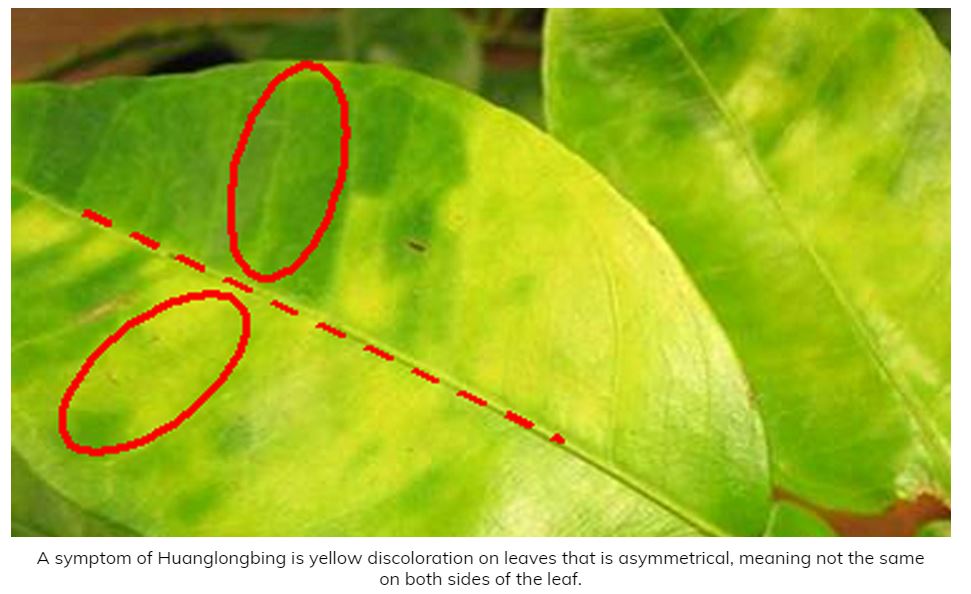
Yellow leaves like these indicate
lime-induced chlorosis
Keep your citrus trees healthy Use organic nutritional sprays, quality fertilizers and beneficial soil fungi
Insect & Disease Control for citrus growing:
We are going to discuss two major pests and how to control them and even help eradicate them.
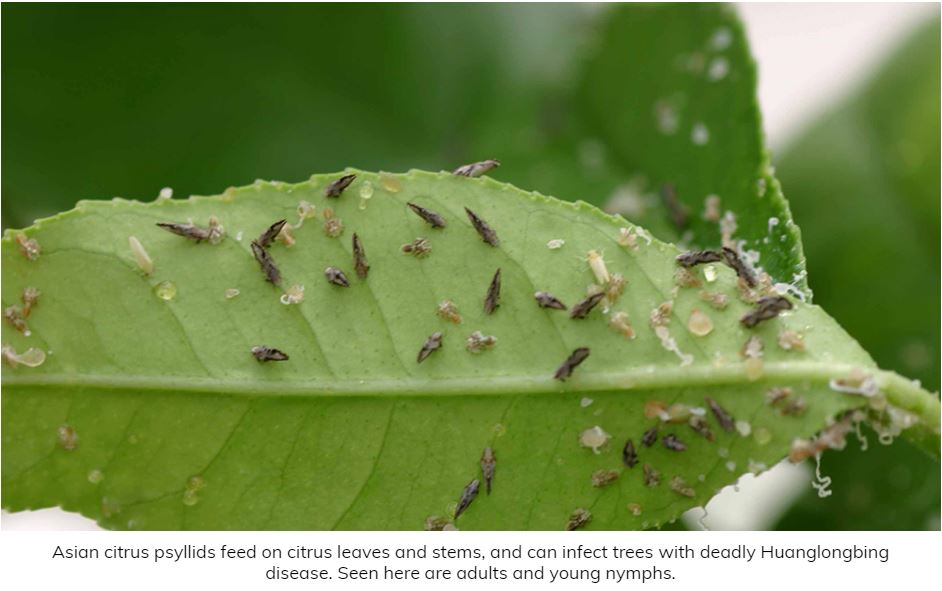
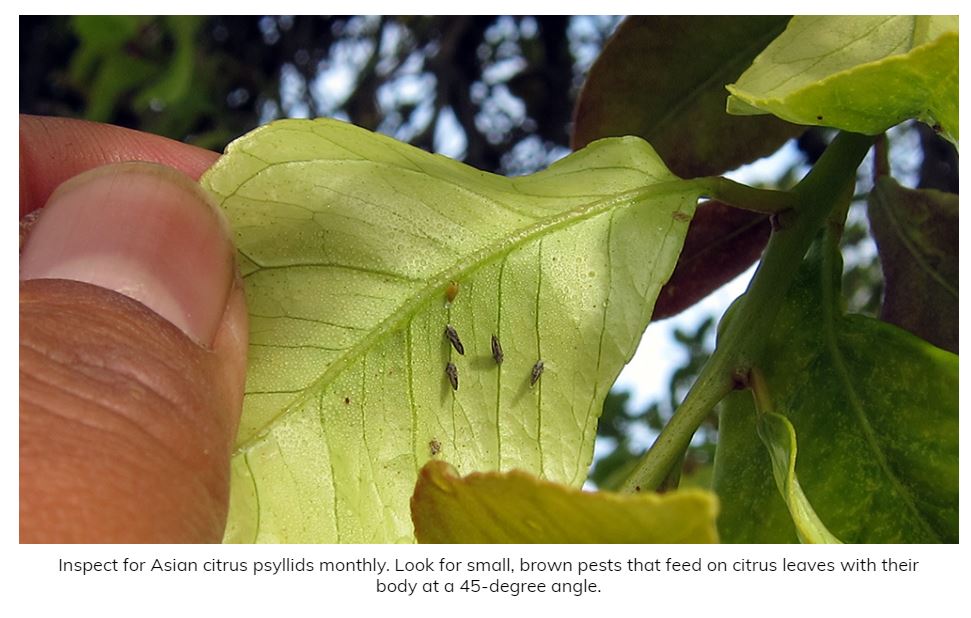
Our first villain is..... The Asian Citrus Psyllid
This trouble maker feeds on your trees new growth flush (emerging new leaves). Evidence of this pests damage is indicated by the curling and distortion of the young leaves. This pest injects toxins during feeding on plant fluids. These psyllids can spread a disease called citrus greening and it's a big headache for all of us in Florida and now even other States like California and Texas.
The next pain in the neck bug is the Citrus Leafminer: Get Spinosad to stop these bad bugs today.
This tiny moth like insect whose populations soar rapidly and develop on the spring and Summer flushes of your citrus trees. As summer approaches and the mercury rises, leafminer populations increase dramatically causing severe damage to your trees overall growth and health. Leaves are scarred with silver tunnel like trails that spiral inside the leaves.
To add insult to injury our summer rains make conditions for citrus canker (bacteria) to spread just perfect! The damaged leaves are extremely susceptible to canker and other diseases. Using copper and other approved fungicides will help keep the canker under control.
Okay now, if you are freaking out at this point may I suggest you relax. With the information you have here you are better informed about growing citrus than the average person. You can grow healthy citrus trees. You can even do it organically if you choose. Well now that you know, it's up to you!
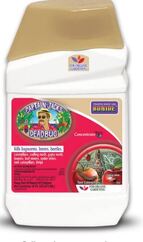
One product that is often recommended is Sevin. It's not organic and some say it's the only way to stop the blue green root eating beetle. One other way is with the use of nematodes and milky spore. So far I have been fortunate and not had to use Sevin. Below are organic products I recommend for citrus trees. For controlling citrus leaf miner use Spinosad it really works! Click the image below (Center Image Below) to learn more and get some. Stop those leaf miners before they ruin your citrus trees. Get some citrus leaf miner traps below on the right.